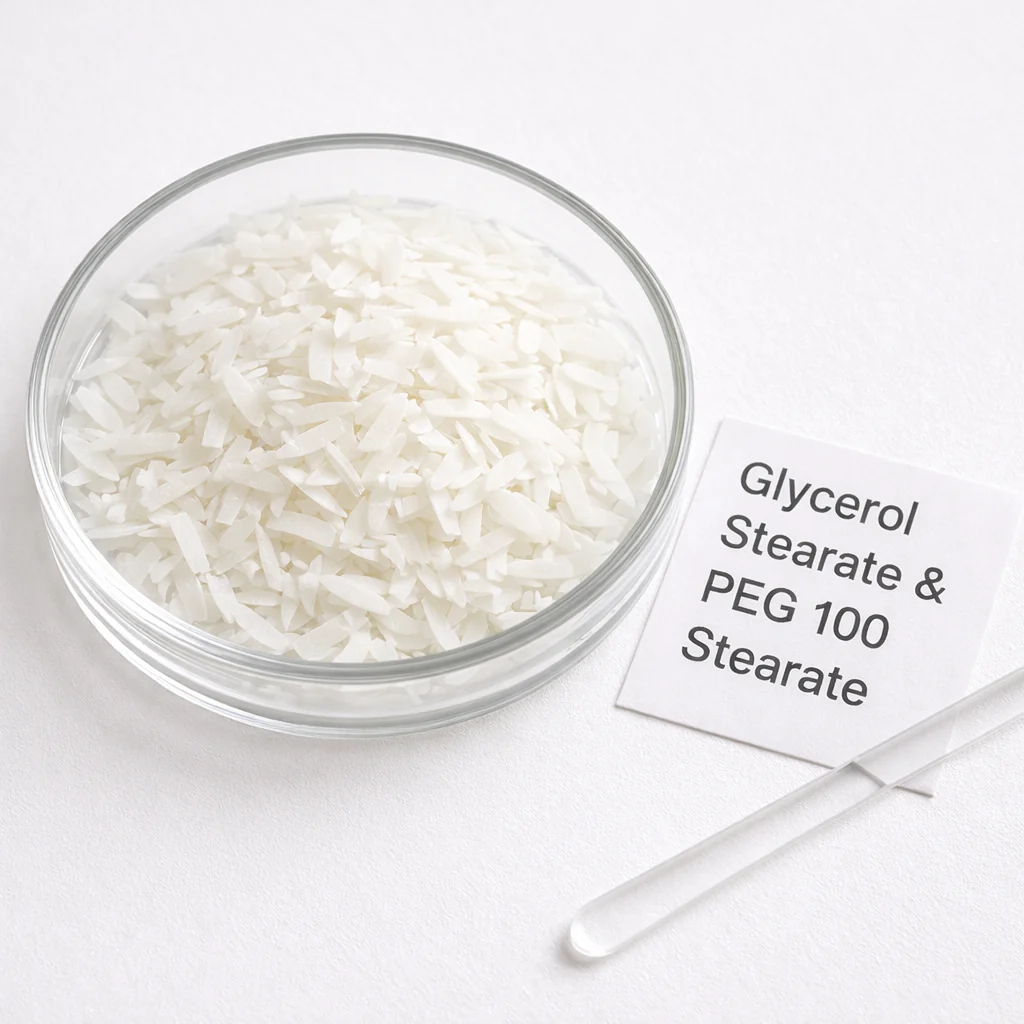
Glycerol Stearate PEG 100 stearate - Emulsifier
Glycerol Stearate & PEG 100 stearate
Cosmetic grade Emulsifier
Synonyms: Primesurf 165
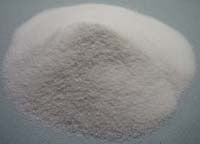
Glyceryl Stearate & PEG-100 Stearate is a paired emulsifier system commonly used in creams and lotions to blend oil and water into a stable, smooth emulsion. It helps create that classic “white cream” texture and gives a nice, non-greasy feel
Composition:
Glyceryl Stearate
-
An ester of glycerin and stearic acid (a fatty acid from plant or animal fats).
-
Waxy, oil-soluble; contributes to emulsification, skin feel, and a bit of thickening.
PEG-100 Stearate
-
A polyethylene glycol (PEG) derivative of stearic acid (PEG chain length ~100).
-
Acts as a high-HLB (more water-loving) emulsifier.
What it does in a formula
1. Primary O/W emulsifier
-
Helps combine oil phase + water phase into a stable oil-in-water emulsion.
-
Without it, oils would separate or form unstable blobs.
2. Texture & skin feel
-
Gives creams and lotions that familiar:
-
“creamy but not waxy” texture
-
Smooth, non-draggy application
-
Light to medium emollience without heavy greasiness
-
3. Stability
-
When used with fatty alcohols (e.g. cetyl alcohol, cetearyl alcohol) and sometimes a secondary emulsifier, it helps resist:
-
Separation
-
Coalescence
-
Temperature swings during storage and shipping
-
Where it’s used
You’ll find Glyceryl Stearate & PEG-100 Stearate in loads of leave-on and rinse-off products, for example:
-
Face creams & moisturisers
-
Body lotions & butters
-
Hand creams
-
Sunscreens (especially classic white emulsions)
-
Hair conditioners & masks
-
Shower creams / cleansing milks
-
Serums/emulsions that are creamy rather than gel-based
Typical use levels are something like 2–5% of the blend in the total formula (often ~3–4% in a standard lotion/cream), but you’d follow the supplier’s recommended range.
Why formulators like it
-
Reliable, very forgiving emulsifier for O/W creams.
-
Works with a wide range of oils (plant oils, esters, silicones).
-
Stable across typical cosmetic pH ranges (about pH 4–8).
-
Pleasant, familiar sensorial profile that customers recognise.
Click here for sales specification sheet
contact us for current certificate of analysis COA
PLEASE NOTE: This product is not for human or animal consumption.
Original: $15.99
-70%$15.99
$4.80Product Information
Product Information
Shipping & Returns
Shipping & Returns
Description
Glycerol Stearate & PEG 100 stearate
Cosmetic grade Emulsifier
Synonyms: Primesurf 165
Glyceryl Stearate & PEG-100 Stearate is a paired emulsifier system commonly used in creams and lotions to blend oil and water into a stable, smooth emulsion. It helps create that classic “white cream” texture and gives a nice, non-greasy feel
Composition:
Glyceryl Stearate
-
An ester of glycerin and stearic acid (a fatty acid from plant or animal fats).
-
Waxy, oil-soluble; contributes to emulsification, skin feel, and a bit of thickening.
PEG-100 Stearate
-
A polyethylene glycol (PEG) derivative of stearic acid (PEG chain length ~100).
-
Acts as a high-HLB (more water-loving) emulsifier.
What it does in a formula
1. Primary O/W emulsifier
-
Helps combine oil phase + water phase into a stable oil-in-water emulsion.
-
Without it, oils would separate or form unstable blobs.
2. Texture & skin feel
-
Gives creams and lotions that familiar:
-
“creamy but not waxy” texture
-
Smooth, non-draggy application
-
Light to medium emollience without heavy greasiness
-
3. Stability
-
When used with fatty alcohols (e.g. cetyl alcohol, cetearyl alcohol) and sometimes a secondary emulsifier, it helps resist:
-
Separation
-
Coalescence
-
Temperature swings during storage and shipping
-
Where it’s used
You’ll find Glyceryl Stearate & PEG-100 Stearate in loads of leave-on and rinse-off products, for example:
-
Face creams & moisturisers
-
Body lotions & butters
-
Hand creams
-
Sunscreens (especially classic white emulsions)
-
Hair conditioners & masks
-
Shower creams / cleansing milks
-
Serums/emulsions that are creamy rather than gel-based
Typical use levels are something like 2–5% of the blend in the total formula (often ~3–4% in a standard lotion/cream), but you’d follow the supplier’s recommended range.
Why formulators like it
-
Reliable, very forgiving emulsifier for O/W creams.
-
Works with a wide range of oils (plant oils, esters, silicones).
-
Stable across typical cosmetic pH ranges (about pH 4–8).
-
Pleasant, familiar sensorial profile that customers recognise.
Click here for sales specification sheet
contact us for current certificate of analysis COA
PLEASE NOTE: This product is not for human or animal consumption.